At Wal-Tek Industries, we work with engineers every day who are striving to design high-quality, functional parts. And while that pursuit of excellence is something we respect and support, we often see well-intentioned engineers apply machining-level tolerances to sheet metal parts. That can dramatically increase cost, complexity, and lead time without improving the function of the part.
Over-tolerancing is especially common when engineers are more familiar with machining than with sheet metal fabrication. But the two processes are fundamentally different in what they can reliably achieve.
Machining vs. Sheet Metal Tolerances: Know the Difference
When working with machined components, it’s common for our precision machine shop to hold tolerances in the range of 0.0005” to 0.005”. This level of precision is achievable on a CNC machining center, where all operations happen inside one tightly controlled machine.
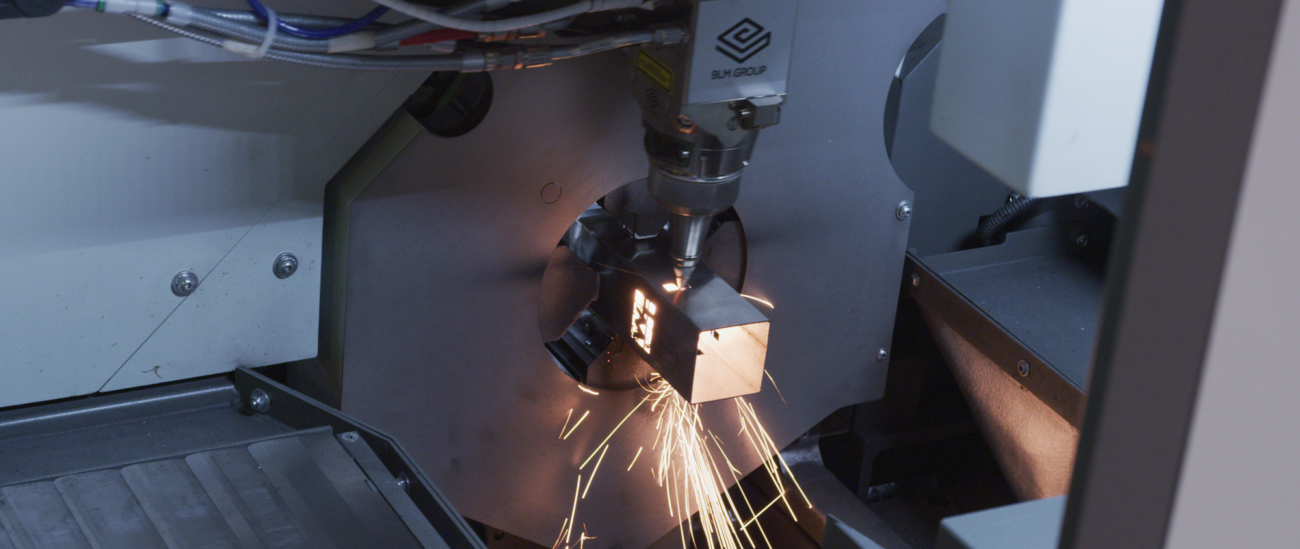
By contrast, custom sheet metal fabrication involves multiple procedures, including laser cutting, forming, welding, grinding, among others. Each process adds natural variability, meaning tolerances generally fall in the range of 0.010” to 0.030”. But that’s to be expected; those tolerances are usually more than adequate for the part’s function.
Trying to force machining tolerances onto sheet metal means more than just tighter tolerances. It can also require secondary operations on parts that could have been cut and bent for a fraction of the cost.
The Cost of Over-Tolerancing
Rather than just telling you the pitfalls of over-tolerancing parts, we’ll show you an example of a part file we looked into. We once received a request-for-quote with a part that had holes from one plane to another that were spec’d as +0.000” / -0.005”. Our Trumpf ACB forming equipment, though very precise, is difficult and costly to maintain at that level of precision. To hit that spec, we instead would have had to run the part on a CNC mill, a much more expensive process. Not only would that increase the cost per part, but it also extends lead time and introduces more opportunities for error.
Now scale that problem to a part with multiple bends, such as hole-to-hole tolerances across four flanges. If each bend adds 0.005” of variability, your total potential variation could be 0.020” or more. Specifying ±0.005” in that situation would end up quite costly.
Wal-Tek’s Advice: Design It Like It’s Sheet Metal (Because It Is!)
Many engineers, especially those with machining backgrounds, model parts in SolidWorks as extruded blocks, then subtract material to “create” the geometry. But this approach treats sheet metal parts like machined parts, and may result in impossible features and unachievable tolerances once the part moves into production.
We’ve even seen models that can’t be unfolded because they weren’t created with sheet metal features. That means we have to reverse-engineer the part just to get started, adding more time, cost, and risk to the project.
That’s why Wal-Tek’s advice for engineers is this:
- Start with flat patterns and bend features, not solid blocks.
- Use radius corners instead of square ones.
- Always match the design intent to the manufacturing process.
The Earlier We Collaborate, the Better
The best results come from collaboration between your engineering team and your manufacturer’s engineers. When you get the Wal-Tek team involved early in the process, we can help you apply realistic, functional tolerances to your sheet metal parts, so you can avoid costly machining operations when they aren’t necessary.
At Wal-Tek Industries, we’re well-versed in Design for Manufacturability (DFM). That means understanding your part’s final application and how it fits into the larger assembly. We’ve helped countless customers optimize their designs for precision machining and fabrication services. And we’d love to help your team, too! Because when you design smarter, we can build better, and everyone wins.